AGEN RSSA
Robotic Structural Steel Assembler
One platform, three configurations.
One machine in three stages. Start with Solo and add robots as you grow — every RSSA can be upgraded on site.
Configure your RSSA
Pick a configuration and a duty class. The plan, the process and the figures below follow your choice — exactly as the machine does when it is upgraded on site.
Specify the maximum workpiece length when you order.
Robots can be retrofitted at any point in the line's life. Extending the track afterwards is technically feasible, but it means dismantling and recommissioning the line, and the cost seldom justifies itself. Specify for the longest beam you realistically expect to fabricate.
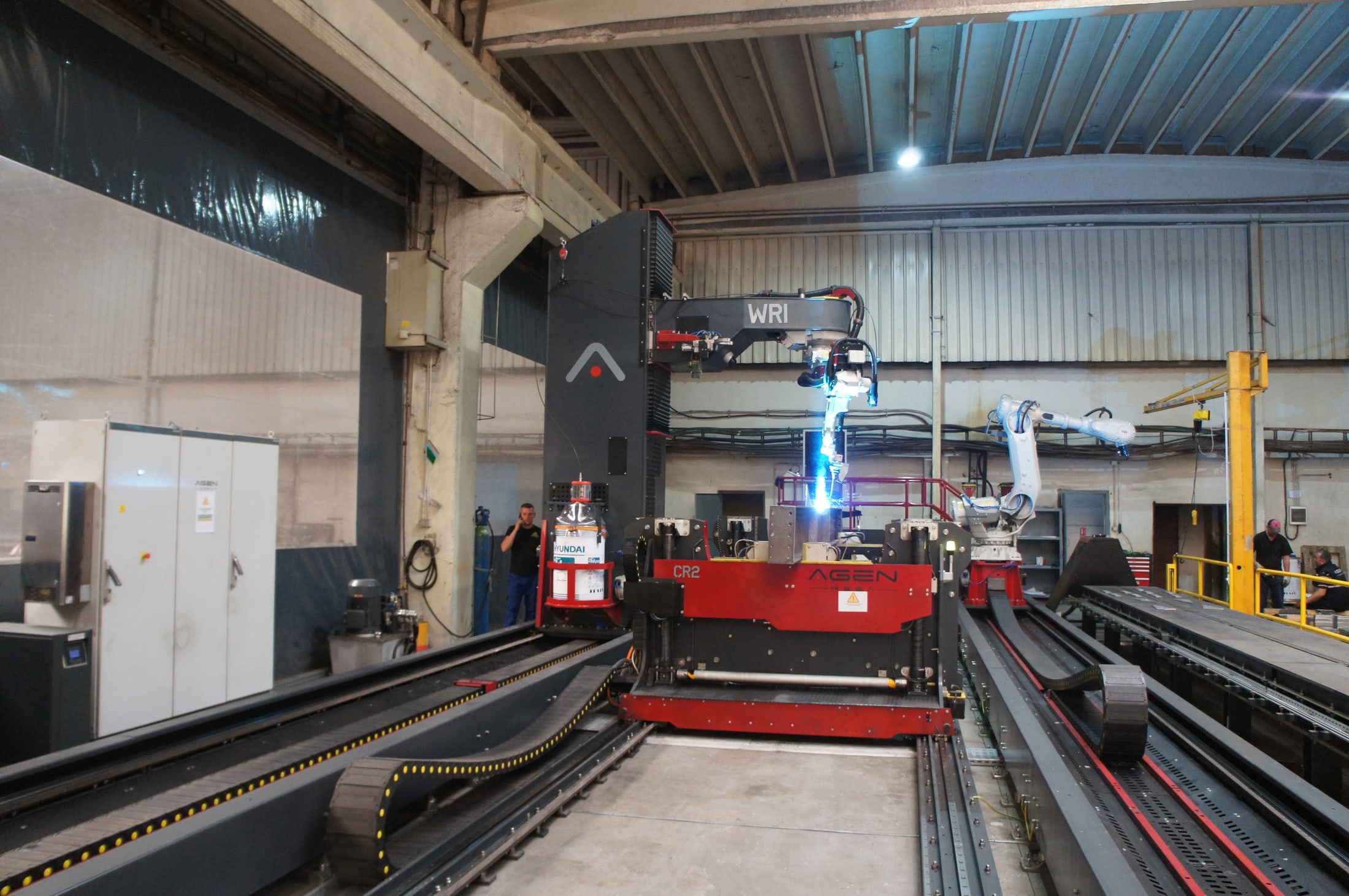
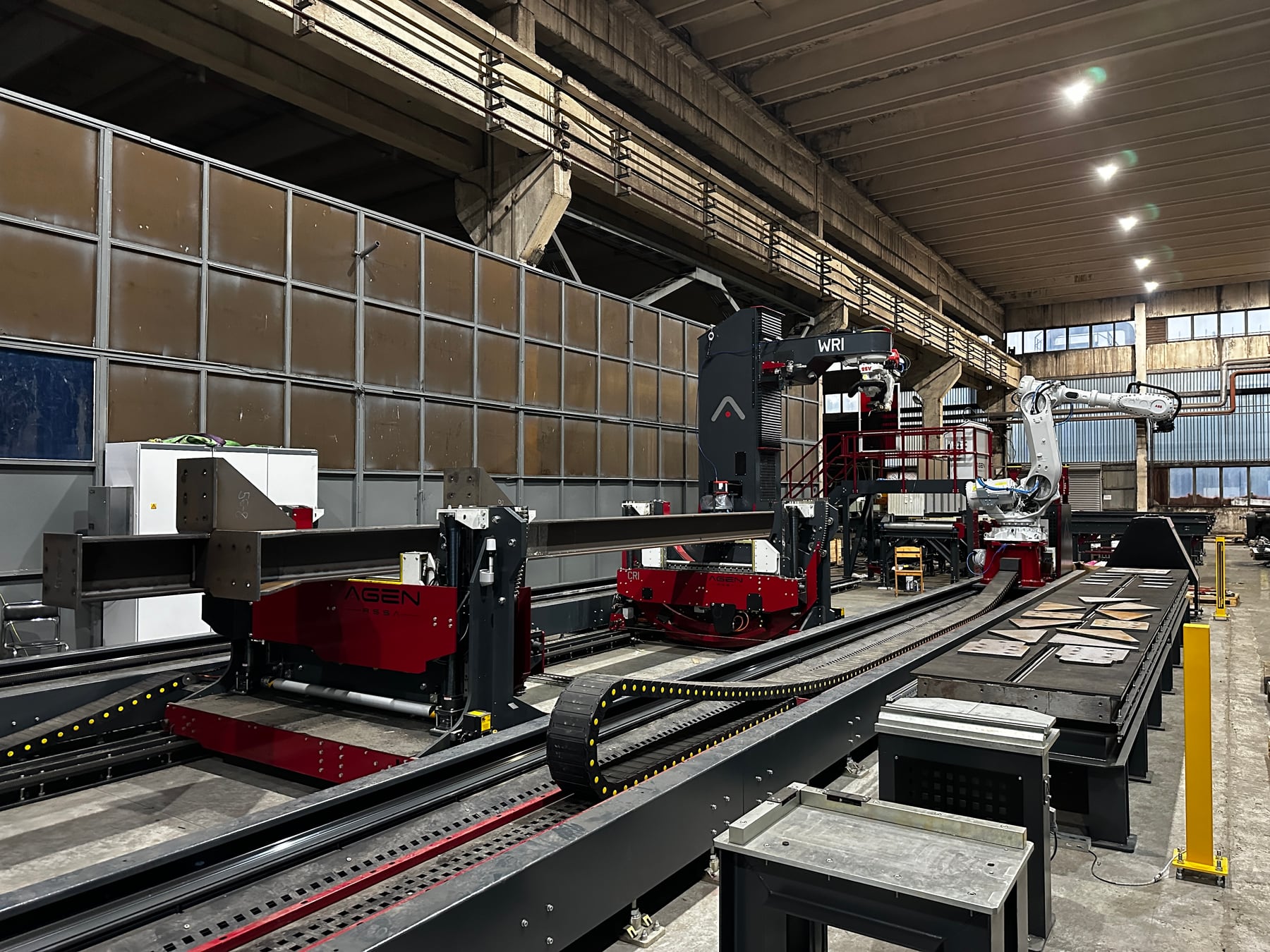
- WR1 Weld tower WR1
- WR2 Weld tower WR2
- HR Handling robot HR
- EL Electrical cabinet
- OP Operator platform
- HPU Hydraulic power source
- Rotators
- Plate table
2 robots · automatic fit & weld
Two robots. Fit & weld.
The AGEN RSSA Duo is an advanced robotic system designed to streamline structural steel assembly with precision and efficiency. Equipped with two industrial robots — a fitting robot for precise alignment and positioning, and a welding robot for strong, consistent welds — this system significantly enhances production speed and quality.
By automating both fitting and welding, AGEN RSSA Duo reduces labour costs, minimises errors, and ensures repeatable, high-quality results. Its cutting-edge technology helps manufacturers increase productivity, improve workflow efficiency, and stay ahead in the competitive steel fabrication industry.
- 2 robotsFitting robot + welding robot
- ± 1.5 mmTotal fitting tolerance
- Deformation compensatedThe beam is measured before every fit, not assumed straight
- 1Load
- 2Scan
- 3Fit
- 4Weld
- 5Unload
- Maximum workpiece length12,000 mmStandard
- Floor space≈ 19 × 9 mLength × width, approximate
- Max. assembly weight6,000 kgHD · High Duty
- Workpiece turningRotatorsTurns profiles up to 1,100 mm
- Handling robot payload200 kgHandling robot HR
The upgrade path
Every step is a retrofit, not a replacement. The line you buy today is the line you keep — only the track length is worth settling at the outset.
Load, scan, fit, weld, unload
One pass through the line. The operator loads and unloads; everything between is the machine's.
 1
Load
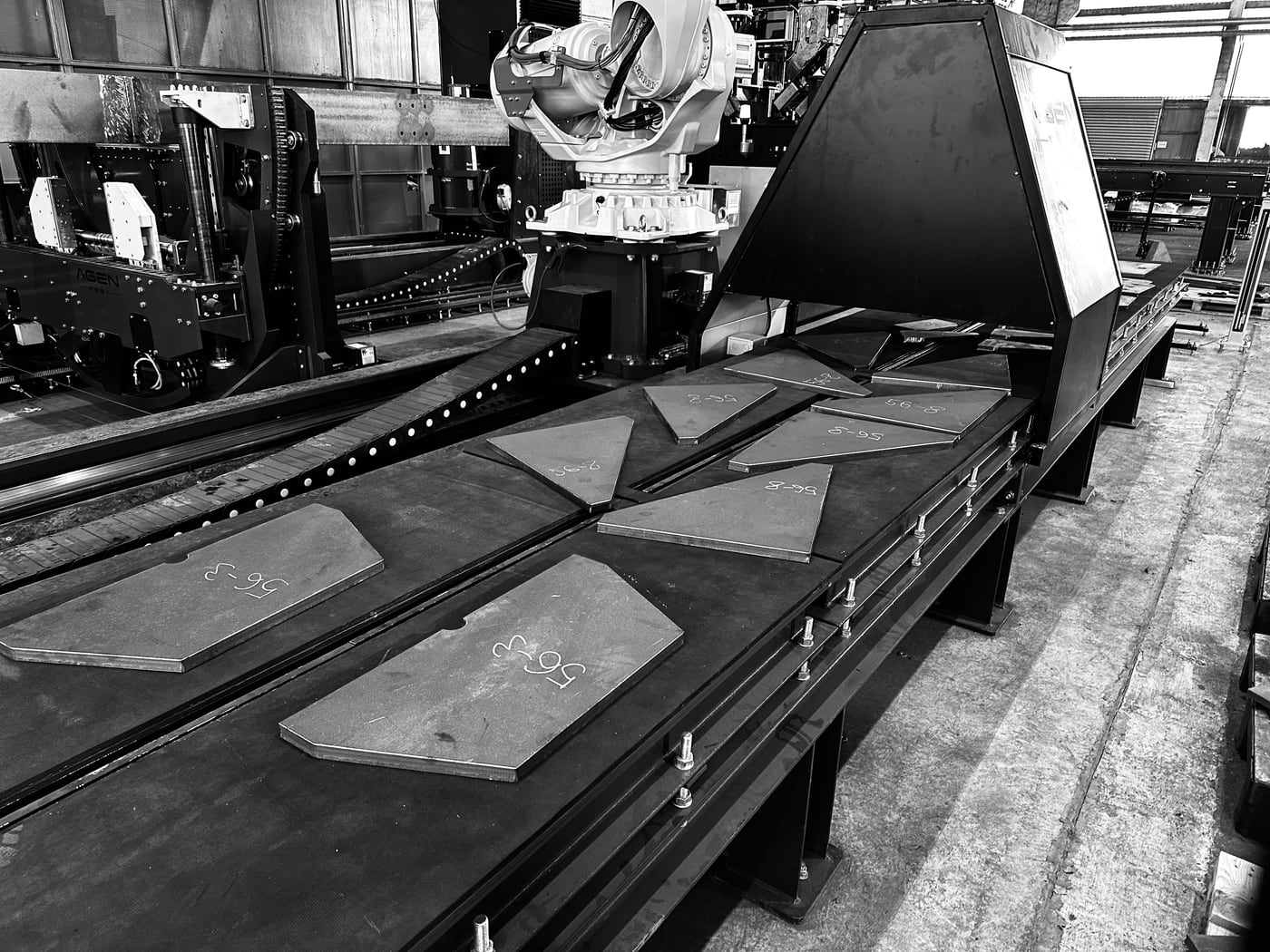
The beam is loaded by crane or forklift, and the plates are laid out on the plate table. From there the line takes over.
 2
Scan
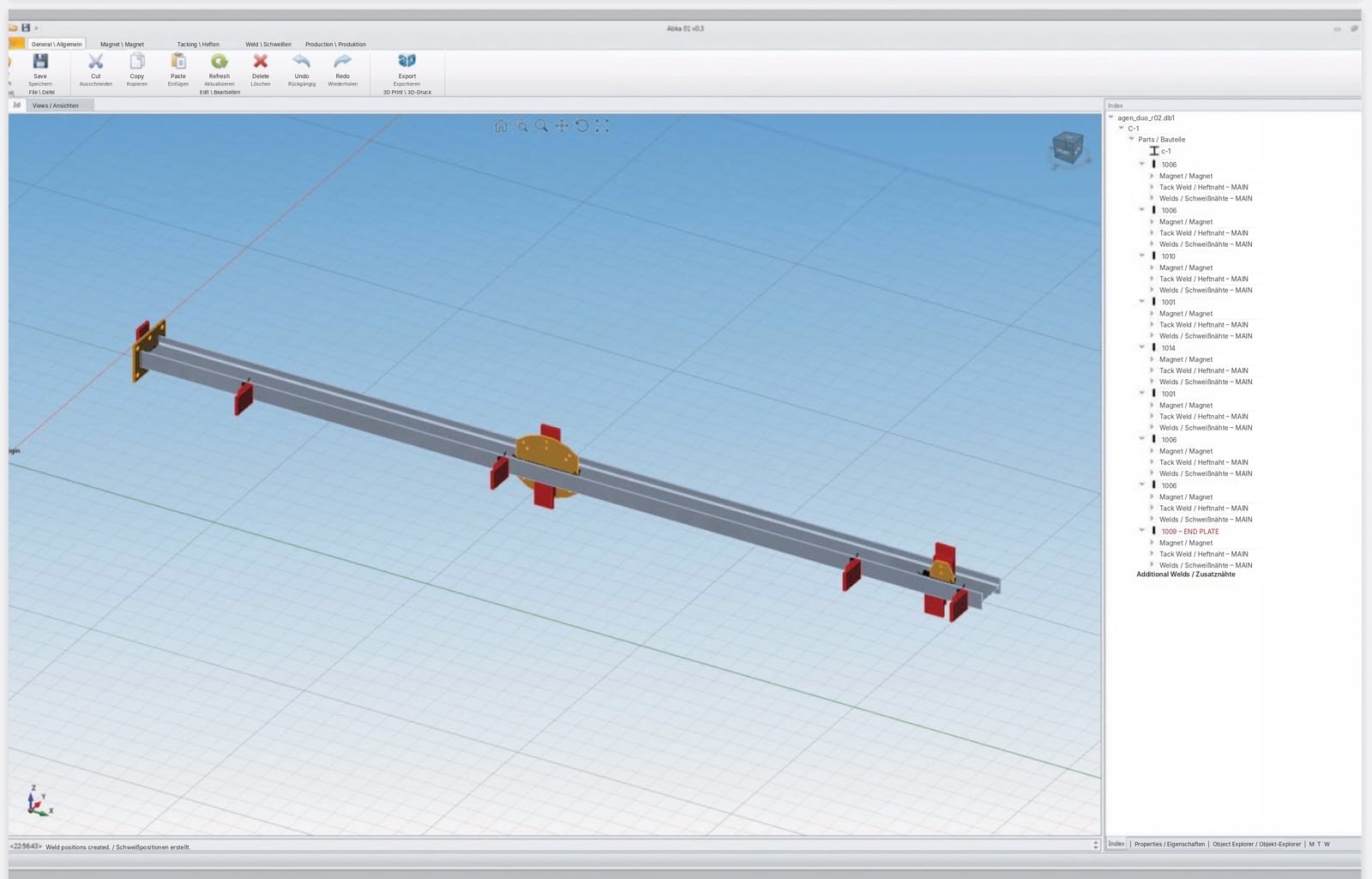
AgenQ prepares the data from your CAD model and imports it directly into the machine — ready for production. It creates the work orders, and the flip device flips the plates if necessary. The laser scans each plate to within ± 0.50 mm, or to whatever tolerance you set for the job.
 3
Fit
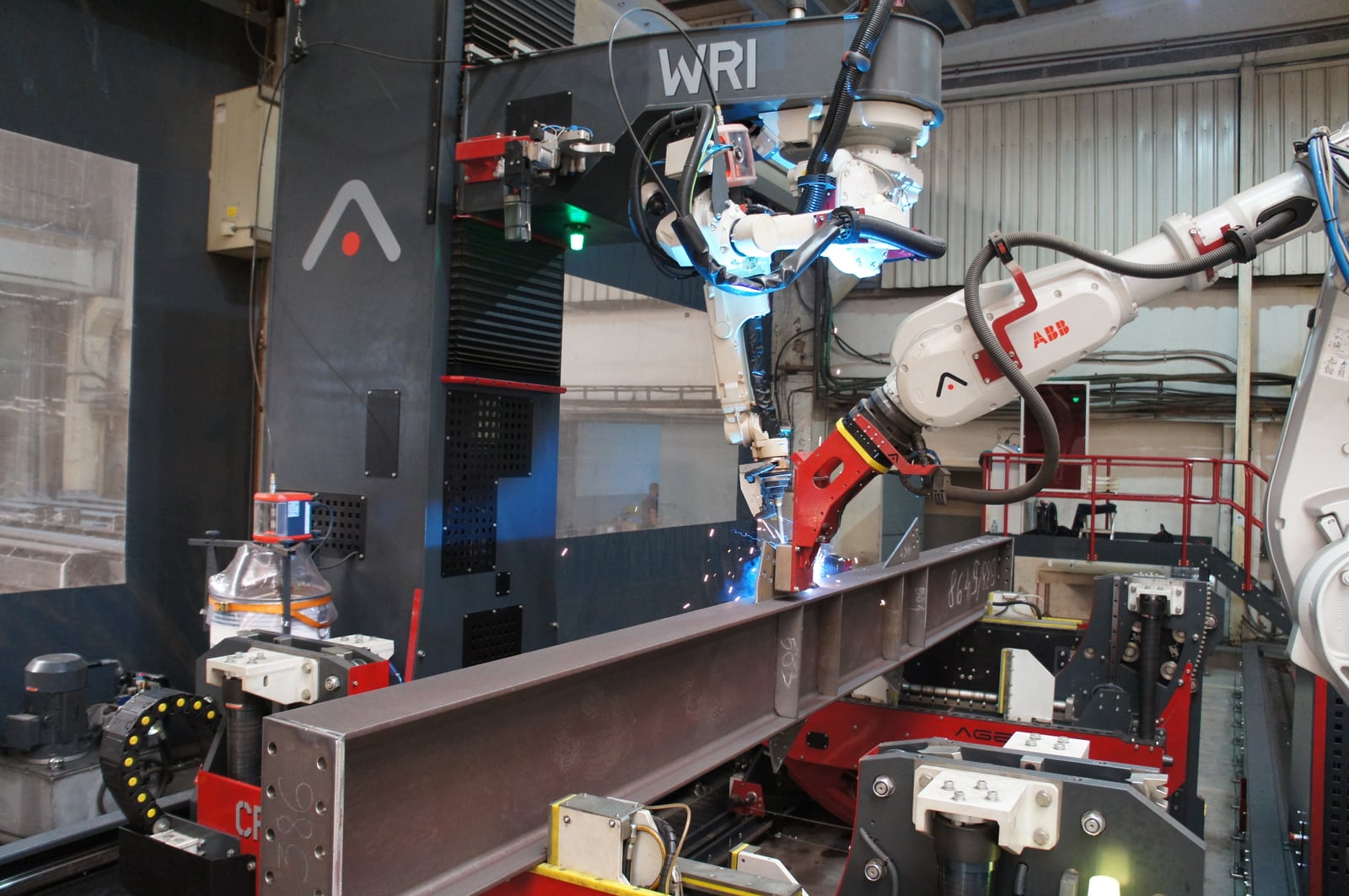
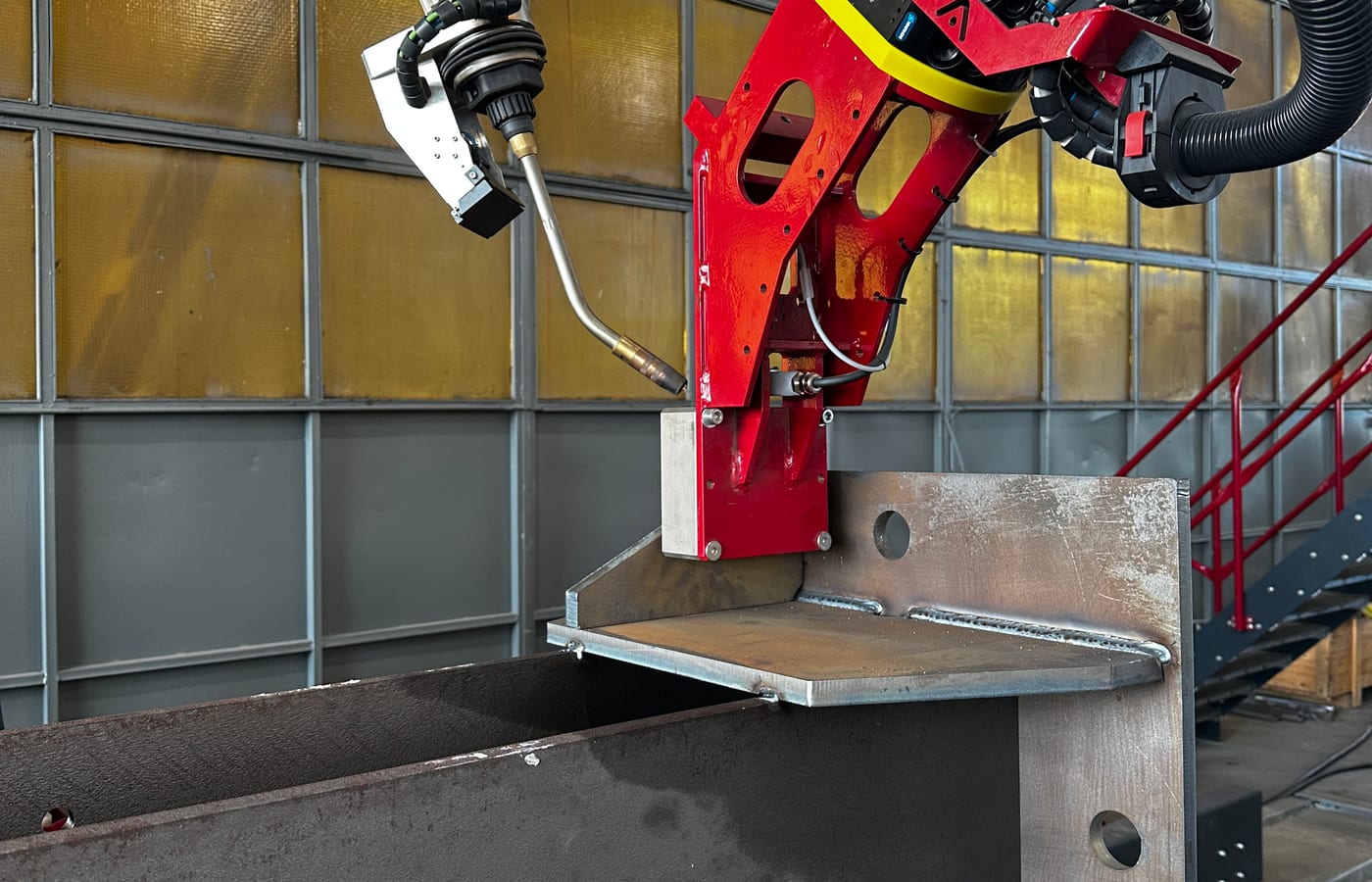
The handling robot sets the plates on the beam — up to 200 kg, or 300 kg on XD. Before every fit, beam deformation is measured and compensated, while high-precision sensors find the exact spot for each tack weld. The total fitting tolerance is ± 1.5 mm.
On Solo, you fit the parts and the line checks them. It detects fabrication errors, warns the operator and cancels the welds of misplaced parts.
 4
Weld
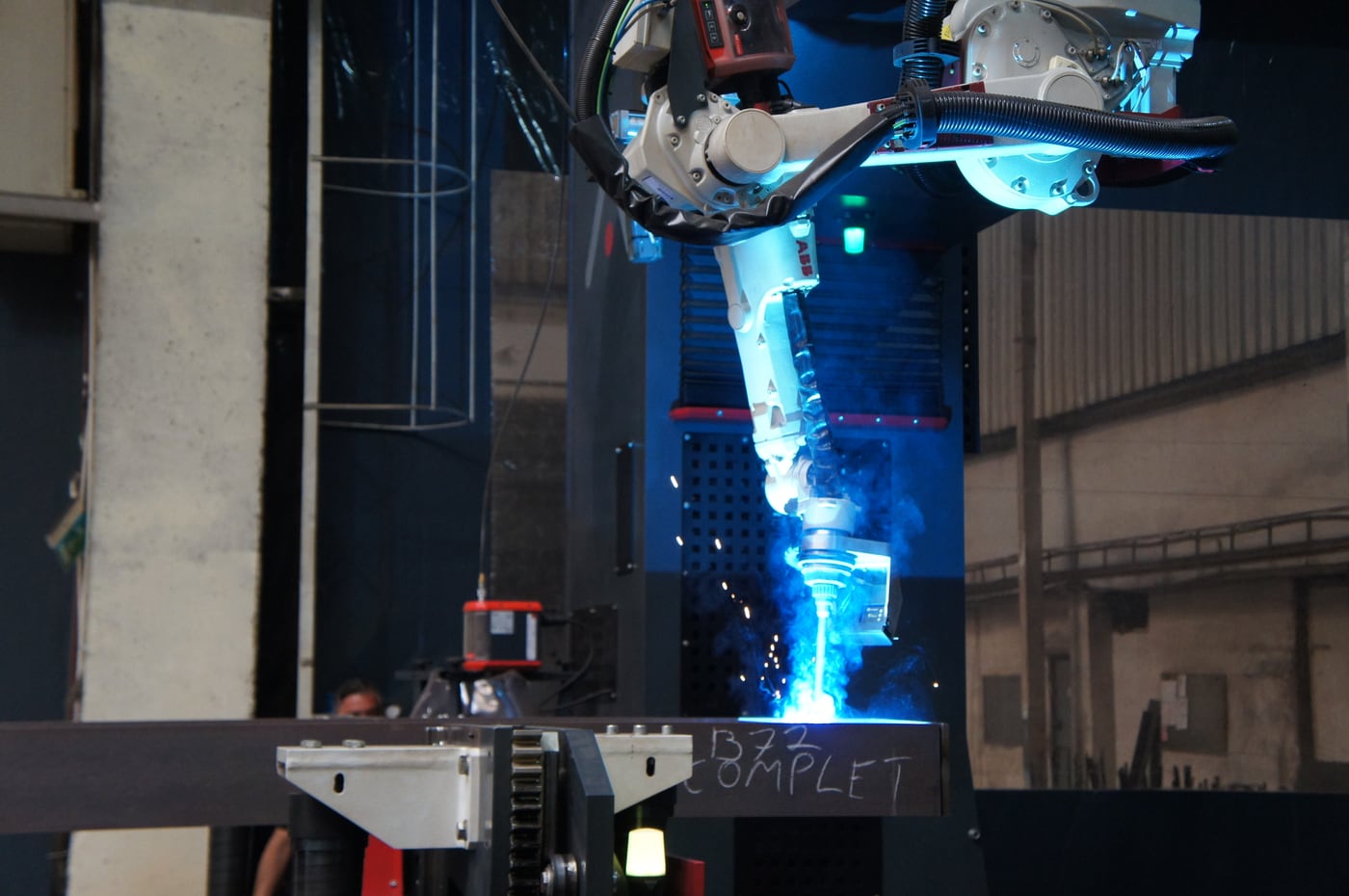
A Fronius synergic power source, 500 A and water-cooled, welds single- and multi-layer seams. Laser touch sensing finds the joint before the arc strikes. Tandem torches are supported as a tailored option.
 5
Unload
The finished assembly leaves the line by crane, or over the optional outfeed conveyor.
LD · HD · XD
Duty classes
AGEN Duo and Trio come in three versions; AGEN Solo — which has no handling robot — in LD and HD.
LD
Light Duty
- Workpiece turning
- Flippers
- Turns profiles up to
- 800 mm
- Max. assembly weight
- 4,000 kg
- Handling robot payload
- 200 kg
Designed for smaller assemblies, the LD model features high-precision flippers capable of rotating steel profiles up to 800 mm. With a 4-ton assembly capacity and a 200 kg handling robot payload, it offers an efficient and cost-effective solution for lighter fabrication needs.
HD
High Duty
- Workpiece turning
- Rotators
- Turns profiles up to
- 1,100 mm
- Max. assembly weight
- 6,000 kg
- Handling robot payload
- 200 kg
Engineered for larger assemblies, the HD model includes rotators that can handle steel profiles up to 1,100 mm. Supporting 6-ton assemblies with a 200 kg handling robot payload, it ensures robust performance and reliability in demanding fabrication environments.
XD
Extra Duty
- Workpiece turning
- Rotators
- Turns profiles up to
- 1,100 mm
- Max. assembly weight
- 6,000 kg
- Handling robot payload
- 300 kg
Built for heavier and more complex assemblies, the XD model retains the 1,100 mm rotator capacity and 6-ton assembly weight of the HD model but features an upgraded 300 kg handling robot payload. This higher capacity is specifically designed to handle larger and heavier steel plates, ensuring greater flexibility and efficiency in structural steel fabrication.
The line
What comes out
Every weld to specification — the leg length the drawing calls for, in the place it calls for, on every assembly and whoever is on shift.
Watch it run
Trial production: HEB320 with 16 add-on parts
Technical specifications
Workpiece range
Sizes refer to profile height. Imperial: 120 mm = 4.7", 140 mm = 5.5", 800 mm = 31.5", 1,100 mm = 43.3".
| LDLight Duty | HDHigh Duty | XDExtra Duty | |
|---|---|---|---|
| H profiles (height) | 120 – 800 mm | 120 – 1,100 mm | 120 – 1,100 mm |
| I profiles (height) | 120 – 800 mm | 140 – 1,100 mm | 140 – 1,100 mm |
| W profiles | W6×13 – W33×176 | W6×13 – W30×391 | W6×13 – W30×391 |
| Box sections | 100 – 300 mm | 100 – 600 mm | 100 – 600 mm |
| Max. workpiece length | 12,000 mm ¹ | 12,000 mm ¹ | 12,000 mm ¹ |
| Max. assembly weight | 4,000 kg | 6,000 kg | 6,000 kg |
| Workpiece turning | Flippers | Rotators | Rotators |
| Handling robot payload | 200 kg | 200 kg | 300 kg |
- Standard length. 15,000 mm and 18,000 mm available as options for all configurations. Handling robot applies to Duo and Trio.
Components
Robotic welding power source
- Power source
- Fronius, synergic
- Rated current / cooling
- 500 A, water-cooled
- Wire diameter
- 1.2 – 1.6 mm
- Torch bend angle
- 22° / 33°
- Wire drum capacity
- 250 kg
- Shielding gas
- Ar + 5% CO₂ / Ar + 18% CO₂
- Weld traceability
- Fronius WeldCube
Torch cleaning unit
- Wire cutting, reaming, anti-spatter
- Included
- Torch measurement & calibration
- Included
Control
- Operator panel
- 24" multi-touch screen
Scanning & sensing
- Plate laser scan tolerance
- down to ± 0.50 mm, adjustable
- Laser touch sensing — linearity
- 0.4 mm
- Laser touch sensing — max. distance
- 500 mm
Positioning & accuracy
- Rotators / positioners (HD · XD)
- 2 pcs
- Rotator max. capacity
- 6,000 kg
- Flippers (LD)
- 2 pcs
- Flipper max. capacity
- 4,000 kg
- Total system tolerance
- ± 1.5 mm
Handling (Duo / Trio)
- Plate table
- 1,000 × 8,000 mm
- Plate flipping
- Included
- Max. plate weight
- 200 kg (XD: 300 kg)
- Magnet tool Mag No.1
- 70 kg · Included
- Magnet tool Mag No.2
- 200 kg · Optional
Options
- Special option on request. Requires prior years of operation with a standard AGEN RSSA and close coordination with our team.
Which configuration fits your shop?
Tell us the profiles you fabricate and the volume you run, and we will size the line — standard or tailored — and tell you what an upgrade would cost later.